Most homeowners only think about their HVAC system when something goes wrong. A unit that stops cooling in July or a furnace that quits in January is not just uncomfortable. It’s expensive. When you schedule HVAC maintenance yearly, you catch small problems before they become $3,000 emergencies, keep energy bills from creeping up, and extend the life of equipment that costs thousands of dollars to replace. This guide walks you through exactly what annual service covers, when to book it, and how to make sure you’re getting the full value from every visit.
Table of Contents
- Key takeaways
- Why you should schedule HVAC maintenance yearly
- Preparing to schedule your annual HVAC service
- Step-by-step guide to booking and executing your tune-up
- Common mistakes that undermine your yearly maintenance
- My honest take on yearly HVAC maintenance
- Schedule your next HVAC tune-up with Precision One Services Inc
- FAQ
Key takeaways
| Point | Details |
|---|---|
| Schedule twice a year | Book a yearly heating and cooling check in spring for AC and fall for heating to maximize readiness. |
| Maintenance cuts emergency costs | Preventive maintenance reduces emergency repair frequency by 65% and extends equipment life by 30 to 40%. |
| Filter care can’t wait | Replace or clean filters every one to two months between professional visits to protect airflow and efficiency. |
| Know your system’s age | Use the $5,000 rule to decide between repair and replacement before spending money on aging equipment. |
| Document every visit | Keep service records and set digital reminders so maintenance never slips through the cracks year after year. |
Why you should schedule HVAC maintenance yearly
Annual HVAC service is not just a nice-to-have. It’s the difference between a system that runs efficiently for 15 to 20 years and one that limps along, costs more to operate, and fails at the worst possible time.
A professional annual tune-up covers a detailed inspection and cleaning of evaporator coils, refrigerant level checks, leak detection, and a full review of electrical terminals, connections, and motor belts. These are not tasks most homeowners can safely or accurately perform themselves. A technician can spot a refrigerant leak that’s been quietly reducing cooling efficiency for months, or catch a fraying belt before it snaps and takes out a motor.
Here’s what a thorough HVAC maintenance checklist includes during a professional visit:
- Filter inspection and replacement (or guidance on owner replacement schedule)
- Evaporator and condenser coil cleaning to restore heat transfer efficiency
- Refrigerant level check and leak detection using pressure testing
- Electrical terminal inspection including tightening connections and checking for corrosion
- Motor and belt inspection for wear, tension, and alignment
- Thermostat calibration to verify accurate temperature control
- Condensate drain check to prevent water damage and mold growth
- Blower component cleaning to restore proper airflow
The distinction between monthly tasks and the annual visit matters. HVAC preventive maintenance uses layered scheduling with monthly, quarterly, and annual tasks. Monthly tasks like filter swaps are owner responsibilities. The annual visit is where a certified technician handles the electrical, refrigerant, and mechanical systems that require professional tools and training.
Pro Tip: Ask your technician to walk you through any findings during the visit. A good tech will show you what they found, not just hand you an invoice. This also helps you understand your system’s condition and plan for future needs.
Preparing to schedule your annual HVAC service
Getting organized before you pick up the phone saves time and helps you ask better questions. Whether you manage one home or a portfolio of rental properties, a little preparation goes a long way.
Start with your system itself. Know the make, model, and approximate age of your HVAC equipment. This information is usually on a label inside the air handler or on the outdoor condenser unit. Older systems may need more thorough inspection, and the age and repair cost calculation known as the $5,000 rule can help you decide whether a repair is worth pursuing or whether replacement makes more financial sense.

Next, think about timing. Scheduling visits in spring and fall aligns maintenance with seasonal transitions and gives you a system that’s ready before peak demand hits. Spring visits prepare your AC for summer. Fall visits get your heating system ready before temperatures drop. Booking early in these windows, before the rush of homeowners who waited too long, usually means faster appointments and sometimes lower rates.
Here’s what to have ready before you call:
- System details: brand, model number, and age of both indoor and outdoor units
- Service history: any past repair records, warranty documents, or previous maintenance reports
- Current issues: unusual noises, inconsistent temperatures, higher-than-normal energy bills, or odors
- Access notes: location of the air handler, outdoor unit, and thermostat so the technician can work efficiently
- Scheduling preferences: two or three available time windows to speed up booking
For property managers handling multiple units, automated scheduling reminders tied to seasonal markers prevent the calendar drift that causes missed visits. A spreadsheet or property management platform that tracks each unit’s last service date and sends alerts 30 days before the next scheduled visit is a simple system that pays for itself in avoided emergency calls.
Step-by-step guide to booking and executing your tune-up
Knowing how to schedule HVAC maintenance is straightforward once you have a process. Here’s a practical sequence that works for both individual homeowners and property managers.
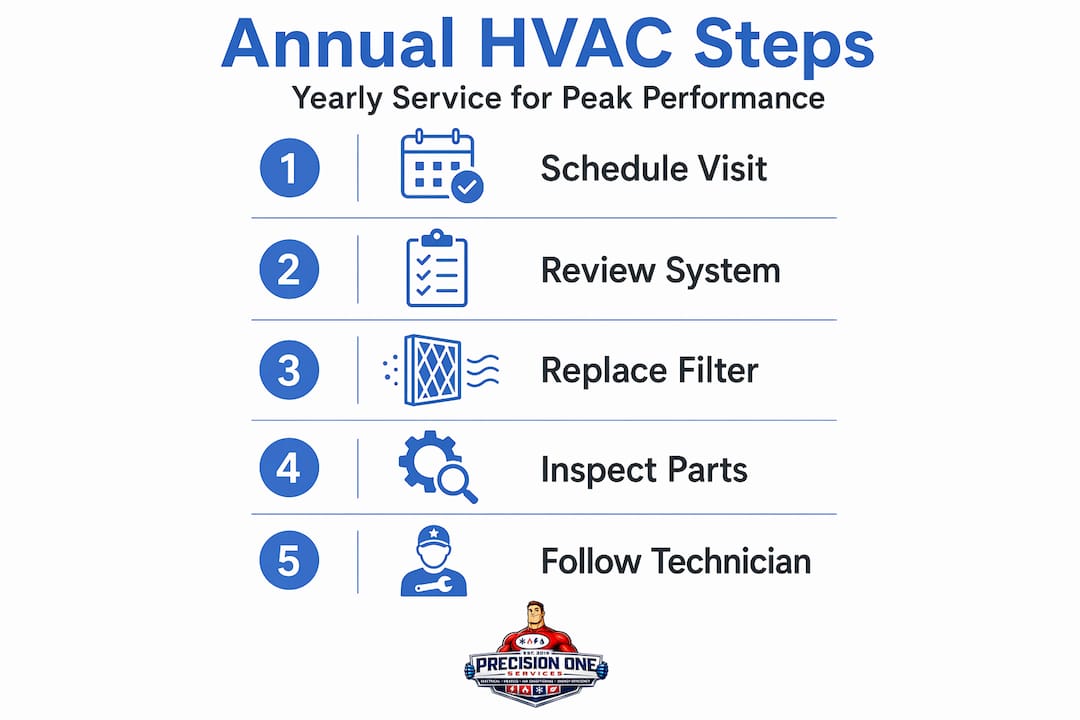
- Call or book online four to six weeks before your target season. HVAC companies get busy fast in late spring and early fall. Early booking gets you better time slots and avoids rushed service.
- Confirm what the visit includes. Ask specifically whether the quote covers coil cleaning, refrigerant check, and electrical inspection. Annual maintenance costs typically range from $150 to $500 depending on system type and scope. Cheap quotes often skip the work that matters.
- Clear the area around your equipment. Move storage away from the air handler and outdoor condenser. Give the technician at least two feet of clear access on all sides.
- Write down any symptoms you’ve noticed. Unusual sounds, rooms that don’t cool or heat evenly, or a spike in your energy bill are all worth mentioning. The technician can investigate during the visit rather than after the fact.
- Be present during the visit if possible. You don’t need to hover, but being available to answer questions and hear findings in real time is valuable.
- Ask for a written summary. A good service report lists every task completed, any issues found, and recommended follow-up. This is your documentation for warranty purposes and future scheduling.
Between professional visits, your job is filter maintenance. Filters should be replaced every one to two months during peak cooling or heating seasons. A clogged filter forces the system to work harder, raises energy consumption, and accelerates wear on the blower motor.
| Task | Who does it | Frequency |
|---|---|---|
| Filter replacement | Homeowner | Every 1 to 2 months |
| Thermostat test | Homeowner | Monthly during peak season |
| Coil cleaning | Technician | Annually |
| Refrigerant check | Technician | Annually |
| Electrical inspection | Technician | Annually |
| Full system tune-up | Technician | Once or twice per year |
Pro Tip: If you have pets, live near construction, or deal with high pollen counts in your area, check your filter monthly rather than every two months. Environments with extra airborne particles clog filters faster and can cut your system’s efficiency significantly between professional visits.
Common mistakes that undermine your yearly maintenance
Even homeowners who do schedule annual service sometimes make avoidable mistakes that reduce the value of that investment. Knowing what to watch for keeps your system in better shape year-round.
- Skipping filter changes between visits. This is the single most common way homeowners undo the benefits of professional service. Dirty, clogged filters reduce airflow, strain the system, and increase energy use. No annual tune-up can compensate for 12 months of a blocked filter.
- Booking too late in the season. Calling for AC service in late June or heating service in December means you’re already in peak demand. Technicians are stretched, wait times are longer, and you may run your system hard before it’s been checked.
- Assuming all service visits are equal. A $79 “tune-up special” that takes 20 minutes is not the same as a thorough annual inspection. Verify credentials, check reviews, and confirm the scope of work before booking.
- Ignoring signs after the visit. If your system is still short-cycling, making unusual noises, or failing to reach set temperatures within a week of service, call back. These are signs the maintenance didn’t resolve an underlying issue.
- Losing service records. Without documentation, you can’t track what was done, when refrigerant was last checked, or whether your warranty requires proof of maintenance. Keep a folder, physical or digital, with every service report.
For property managers, the risk multiplies across units. A single missed property can turn into a tenant complaint, an emergency repair call, and a potential lease dispute. Aligning maintenance with seasonal needs and using digital tools to track each unit’s service history removes the guesswork entirely.
My honest take on yearly HVAC maintenance
I’ve talked to a lot of homeowners who treat HVAC maintenance the same way most people treat dental checkups. They know they should do it, they intend to get around to it, and then something else comes up. The system keeps running, so it feels fine. Until it isn’t.
What I’ve seen repeatedly is that the cost of skipping maintenance doesn’t show up all at once. It shows up as a slightly higher energy bill every month, a system that runs longer to reach the same temperature, and then a compressor replacement that costs more than three years of annual service combined. The damage is gradual and invisible until it isn’t.
My honest recommendation is to treat the spring and fall scheduling dates as non-negotiable calendar events, the same way you’d schedule a lease renewal or a property inspection. Set a recurring reminder in your phone for March 1 and September 1. That’s your signal to book. Don’t wait for a problem to appear.
One more thing I’d add: the quality of the technician matters as much as the frequency of visits. A thorough tech who explains what they found and gives you honest guidance on your system’s condition is worth paying more for. A rushed visit that checks boxes without actually inspecting the equipment is money wasted. Ask questions. If a technician can’t explain what they did and why, that’s a signal.
— Michael
Schedule your next HVAC tune-up with Precision One Services Inc
If you’re ready to stop guessing and start protecting your system, Precision One Services Inc makes it easy to get professional annual HVAC service without the runaround. Serving Beaumont, CA and surrounding areas, the team handles everything from AC diagnostics and repair to full heating system tune-ups under one roof.
Whether you own a single home or manage multiple properties, Precision One Services Inc brings the same level of care and honest communication to every visit. Their heating system services cover furnaces, heat pumps, and everything in between. And if budget is a concern, flexible financing options are available to help you stay on top of maintenance without stretching your monthly expenses. One call. One company. No coordination headaches.
FAQ
How often should you schedule HVAC maintenance?
Most systems benefit from service twice a year: once in spring before cooling season and once in fall before heating season. At minimum, schedule one annual visit to keep your system running efficiently and catch issues early.
What does annual HVAC service typically cost?
Annual maintenance costs typically range from $150 to $500 depending on your system type, location, and what the visit includes. Planned maintenance agreements often reduce this cost while locking in priority scheduling.
When is the best time to perform HVAC maintenance?
Spring and fall are ideal because they align with seasonal transitions. Booking before peak demand hits means faster appointments and a system that’s ready when you need it most.
What happens if you skip yearly HVAC maintenance?
Skipping annual service leads to reduced efficiency, higher energy bills, and a significantly higher risk of unexpected breakdowns. Preventive maintenance reduces emergency repairs by 65% and extends equipment life by 30 to 40%.
Can homeowners do any HVAC maintenance themselves?
Yes. Replacing or cleaning filters every one to two months is the most impactful thing a homeowner can do between professional visits. Thermostat testing and keeping the area around the outdoor unit clear are also straightforward owner tasks that support system health.
Recent Comments